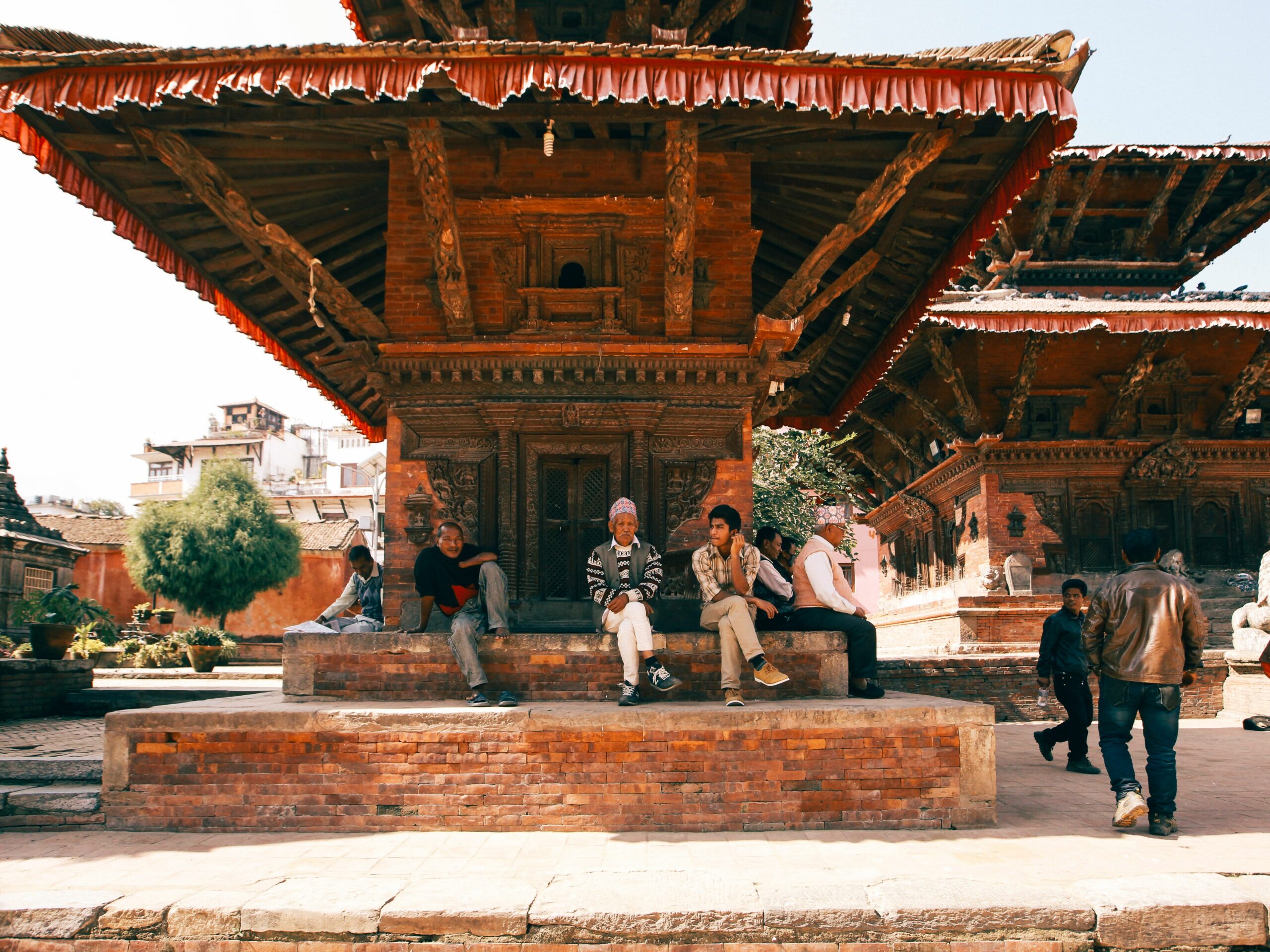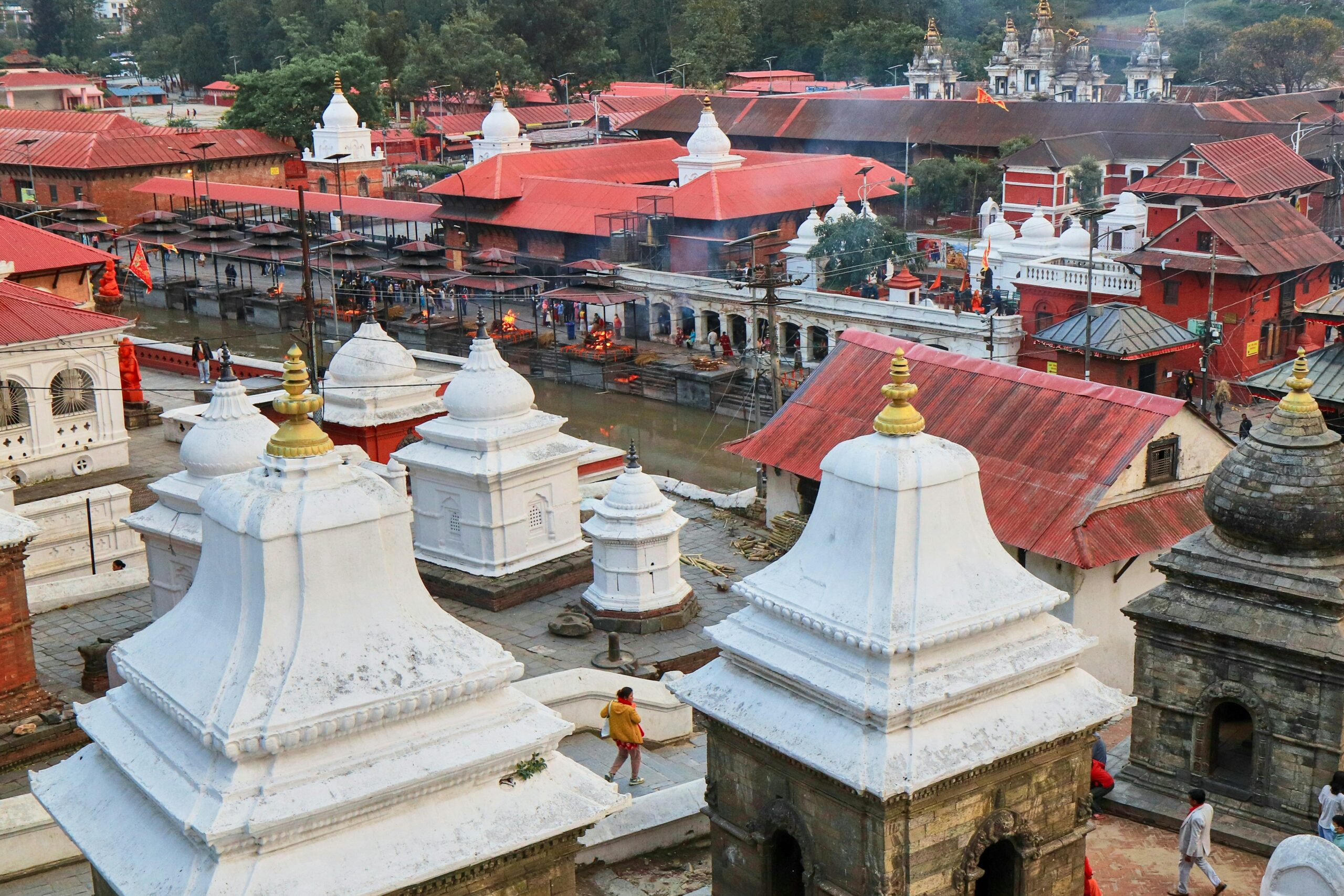
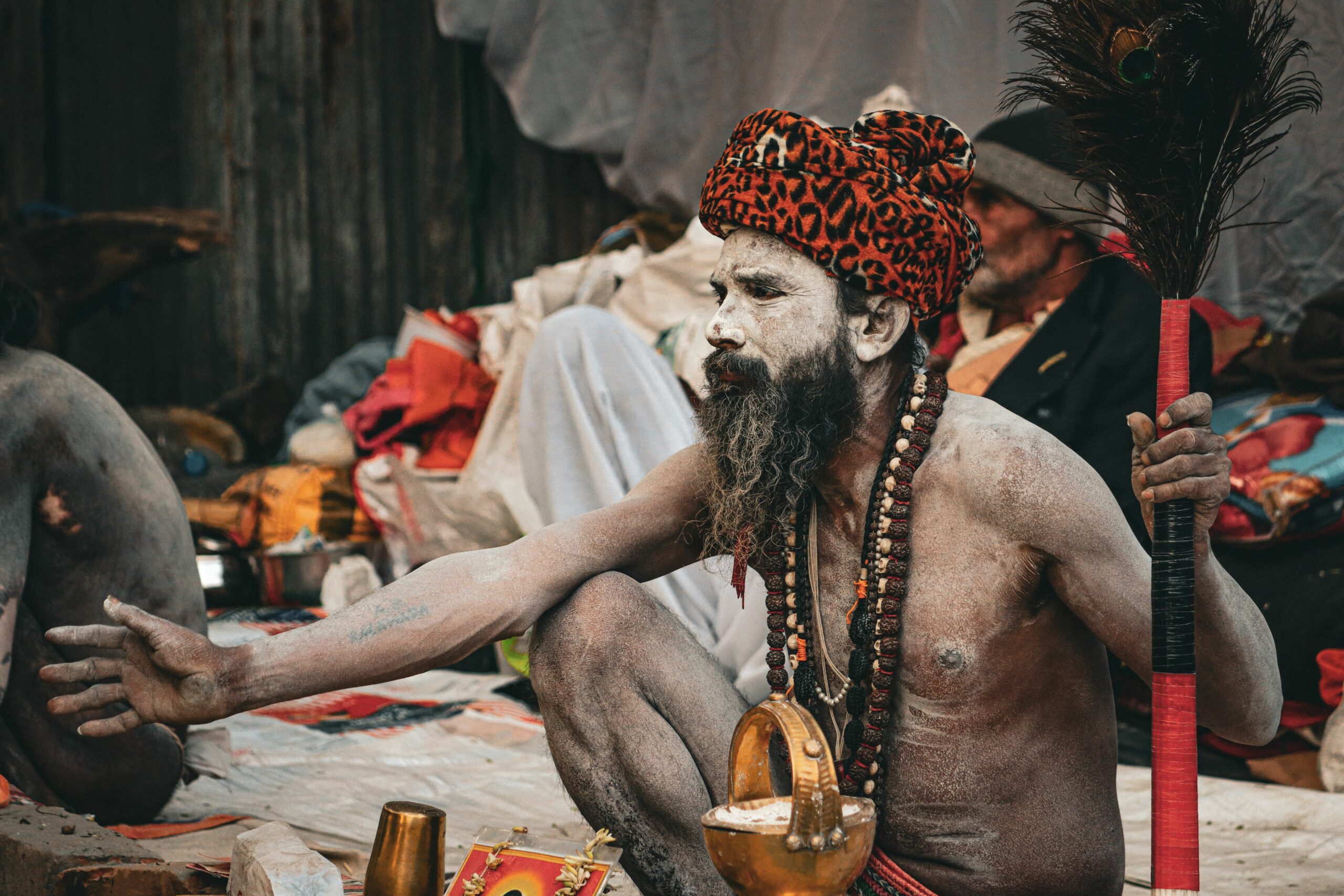
At Pashupatinath, they are difficult to miss. Some wear long orange robes, while others have bodies covered in ash. Their hair falls in thick, matted locks, their foreheads are sometimes marked with white lines, and a few sit for hours near the temples lining the Bagmati River. For those encountering them for the first time, sadhus are among the most striking figures in Nepal.
Their appearance can be so fascinating that it sometimes obscures what matters most. These men—and women, though fewer in number and less visible—belong to an ancient tradition in which some choose to turn away from material life and devote themselves to a spiritual path.
Understanding that choice allows us to look beyond the mysterious figure photographed outside a temple. The ash, the hair, the clothing, the pilgrimages and even certain surprising practices begin to take on a different meaning.
Choosing a Life of Renunciation
A sadhu is a Hindu ascetic, someone who chooses a life centered primarily on spirituality and detachment from material possessions.
For some, this decision comes after a life much like that of many others, with a family, a profession, responsibilities and possessions. Others take this path at a much younger age. There is no single story behind the people we encounter.
The change can be considerable. Depending on the path they follow, becoming a sadhu means giving up much of what previously defined their place in society: material possessions, a career, the pursuit of comfort, personal ambitions and sometimes family life. Meditation, prayer, yoga, pilgrimages and the study of religious texts then take on a far greater role.
Yet not all sadhus live in isolation in the mountains. Some travel between the great sacred sites of Nepal and India, while others settle near a temple or join a religious community. Some teach or regularly interact with devotees, while others seek greater solitude.
Their daily lives can therefore look very different, but they share a common intention: learning to place less importance on possessions, social status and the desires that usually occupy so much of our lives.
The Signs of a Different Way of Life
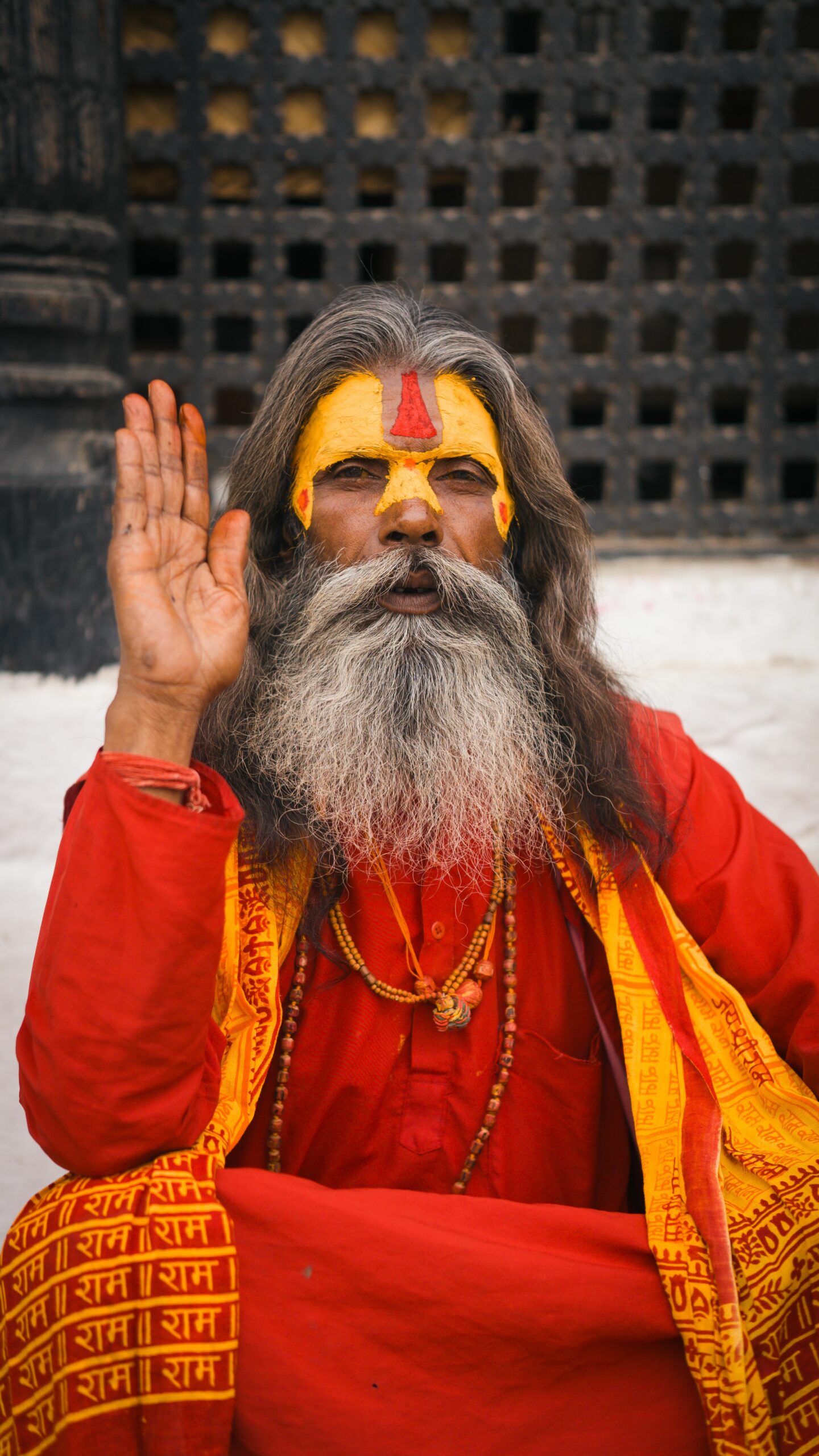
Once we understand the meaning of certain symbols, the appearance of sadhus becomes more than something visually striking. The ash worn by some of them is perhaps the clearest example.
It is particularly associated with ascetics devoted to Shiva, one of Hinduism’s principal deities, often depicted as a yogi withdrawn from the world. The ash serves as a reminder that the body and possessions are temporary, and that all existence eventually comes to an end or undergoes transformation.
Within the sanctuary, this symbol takes on particular significance. Men covered in ash stand just a short distance from the ghats where the deceased are cremated each day beside the Bagmati River. The idea may seem abstract when we read about it, but it becomes far more tangible when we see it expressed both on a person’s skin and in the funeral rites taking place nearby.
Long, matted locks of hair also carry meaning, as Shiva himself is traditionally depicted with tangled hair. For some of his devotees, allowing their hair to grow is another way of gradually letting go of conventions surrounding appearance.
Orange and saffron robes have likewise been associated with religious renunciation for centuries. Even the markings painted on the forehead can reveal a spiritual affiliation: the three horizontal white lines seen on certain sadhus are particularly characteristic of Shaivite traditions.
These details form something of a language. Without understanding them, we see an extraordinary silhouette. As we begin to recognize their meaning, we discover a religious story written directly on the body.
Different Paths Behind a Familiar Figure
The word sadhu can give the impression of describing a single, uniform group, when the reality is far more diverse. Some belong to Shaivite traditions, while others follow Vishnu or some of his forms, notably Rama and Krishna. Within these major families are different lineages, each with its own teachers, teachings and practices.
We do not need to know all their names to understand what we are seeing in Nepal. What matters is recognizing that two men dressed in orange may lead very different lives and follow different traditions.
This also explains why not everyone fits the familiar image of an ash-covered sadhu with an enormous beard. Some wear ordinary clothing, others study or meditate away from visitors, and certain traditions embrace far more radical practices.
Among the most striking are the Naga sadhus, whom visitors may encounter during major religious festivals. Some live naked and cover their bodies in ash, a form of ritual nudity that carries spiritual significance by expressing an extreme detachment from clothing and social conventions.
Under Shiva’s Gaze
It is through Shiva that the presence of so many sadhus at Pashupatinath truly begins to make sense. The sanctuary is dedicated to him in his form as Pashupati, the “Lord of Animals,” and is one of Nepal’s most sacred places for Hindu devotees.
Shiva occupies a distinctive place in Hindu religious imagery. He may be depicted with his family, but also as the ultimate yogi: meditating in the mountains, with matted hair, a body covered in ash and a life removed from material concerns. Several of the signs we noticed earlier among the ascetics find their symbolic origins here.
For those following a similar spiritual path, the sanctuary naturally becomes an important pilgrimage destination. Some stay for long periods, living in part on offerings from devotees, while others stay for a time before continuing their journey to another sacred site.
The setting makes their presence even more powerful. Temples stand beside the Bagmati and the cremation ghats, bringing prayer, meditation, death and the idea of detachment that shapes their way of life together within a relatively small space.
The Great Night of Shiva
There is one occasion when this presence takes on an entirely different dimension: Maha Shivaratri, the great annual festival dedicated to Shiva.
During the festival, the sanctuary becomes the center of an immense gathering. Pilgrims flock to Kathmandu, and large numbers of sadhus arrive from across Nepal and India. For several days, the area hosts an extraordinary concentration of practices and traditions that are usually spread across many sacred places.
It is particularly during this period that visitors may encounter Naga sadhus. Their ritual nudity can be especially surprising to those unfamiliar with its meaning, but it carries a spiritual dimension and expresses an especially profound renunciation of social conventions.
Shivaratri thus offers a glimpse of very different forms of ascetic life, from the most discreet to the most radical. What a visitor observes over a few hours may reflect decades of discipline and personal choices.
Between Sacred Smoke and Prohibition
It is probably one of the questions many travelers ask themselves without always daring to say it aloud: why do we see certain sadhus smoking cannabis when it is illegal in Nepal?
Among some Shaivite ascetics, cannabis use has an ancient ritual dimension. It may be consumed through a chillum, a small conical pipe, and is associated in particular with meditation or certain religious practices. This does not mean that all sadhus smoke or that cannabis is necessary to follow their spiritual path.
The situation in Nepal is somewhat surprising. Cannabis consumption remains prohibited by law, yet certain editions of Shivaratri have seen particular tolerance toward ascetics gathered at the sanctuary. This is not, however, a permanent right, nor does such tolerance automatically extend to other visitors.
Seeing a sadhu with a chillum therefore tells us more than an unusual scene might suggest. Behind the smoke lies an ancient ritual practice, a legal prohibition and traditions that authorities have sometimes had to reconcile.
Through the Eyes of Travelers
Accustomed to the many visitors, some sadhus willingly pose for photographs and may ask for a small contribution in return.
This does not determine whether they are “real” or “fake.” A man may have devoted his life to religious practice while also accepting a few rupees to be photographed. Conversely, an enormous beard, an ash-covered face and striking clothing cannot, on their own, tell us the story of the person wearing them.
The simplest approach is to ask before taking a photograph. If a contribution is expected, everyone knows where they stand. This consideration is particularly important in a place where families may also be nearby, accompanying a loved one through funeral rites.
Taking a few moments to observe before reaching for a phone or camera often reveals more than a photograph alone. Conversations with pilgrims, prayers, long periods of waiting and ordinary gestures can tell us far more than the spectacular portrait we originally came to capture.
Beyond Appearances
Once we begin to understand some of their symbols, our perspective changes. The hair, the colors and the ash-covered faces still catch our attention, but gradually cease to be the main focus.
What becomes more intriguing is the choice behind them. Much of our lives is spent building a career, a home, accumulating wealth, establishing social standing or simply seeking greater comfort. Sadhus have chosen to explore an almost opposite direction, seeking to reduce the importance they place on these things.
Their way of life does not need to be idealized to make us reflect. It simply shows that what we consider essential is not necessarily essential to everyone.
At Pashupatinath, this idea takes on a particular dimension. Pilgrims come to pray, families accompany their dead to the Bagmati, and just a short distance away, certain men have devoted their lives to detaching themselves from the very body, possessions and status to which we so often dedicate much of our own.
Perhaps this is ultimately what makes sadhus so fascinating. Behind their choices, their symbols and their way of life lies an entirely different understanding of existence, far removed from the one around which we usually build our own.