
In the streets of Kathmandu, all it takes is following the steam rising from a kitchen to have a good chance of finding them. A few bites of delicately pleated dough, arranged around a small bowl of spicy sauce: momos are among those dishes you discover almost immediately in Nepal and soon come to associate instinctively with the country.
Yet behind their apparent simplicity lies a story of trade routes, Tibetan influences, and adaptation to local tastes. Now one of the most popular foods in everyday Nepali life, momos tell a story of how a culinary tradition can travel, evolve, and ultimately become deeply rooted in the place that embraced it.
From Tibet to the Kathmandu Valley
The history of momos follows the ancient trade routes that once connected the Kathmandu Valley to the Tibetan Plateau. By the 17th century, trade between the two regions was flourishing, and Newar merchants regularly stayed in Lhasa. There, they encountered the filled dumplings already found in Tibetan cuisine and eventually brought the preparation back to the valley.
The dish then began to change. Yak meat, commonly used in Tibet, gave way to buffalo meat, while ginger, garlic, and local spices gradually found their way into the filling. The Newars also developed smaller versions known as momo-cha, compact enough to be eaten in a single bite, with their juices still sealed inside during cooking.
This adaptation reflects something much broader about Nepali cuisine. Situated between India and Tibet, the country has long been a crossroads of people, merchants, and culinary traditions. Its food naturally bears the marks of these encounters while retaining distinct regional identities, particularly in Newar and Thakali cooking.
Over the decades, this small dumpling from the Himalayan trade routes moved beyond its origins to become an integral part of daily life. By the 1960s, momos were already being sold outside Kathmandu’s movie theaters. Today, they can be found everywhere, from modest street stalls to the menus of contemporary restaurants.
A Simple Dough, a Filling, and Endless Possibilities
The foundation could hardly be simpler: flour and water are combined into a soft dough, then rolled into small circles. In the center goes the filling, traditionally made with minced meat seasoned with onion, garlic, ginger, and spices, before the edges are carefully sealed. The classic cooking method is steaming, using stacked baskets that allow several batches to cook at once.
From this simple starting point, the variations are almost endless. Fillings now range from chicken to vegetarian combinations of vegetables, paneer, or cheese. Steaming remains the most familiar method, but fried versions are also popular, along with momos served in broth or generously coated in sauce, as with jhol momo.
The shaping itself has its subtleties. Some momos are round, with pleats gathered at the top like a small pouch. Others resemble crescents edged with neat, even folds. Behind these different shapes lies a skill that requires more precision than it first appears: adding enough filling without overloading the dough, holding the edges between the fingers, and repeating each fold until the seal is firm enough to keep the juices inside as the dumplings cook.
Watching someone who has mastered this technique makes it look effortless. Trying it yourself quickly reveals just how much the hands have learned through practice.
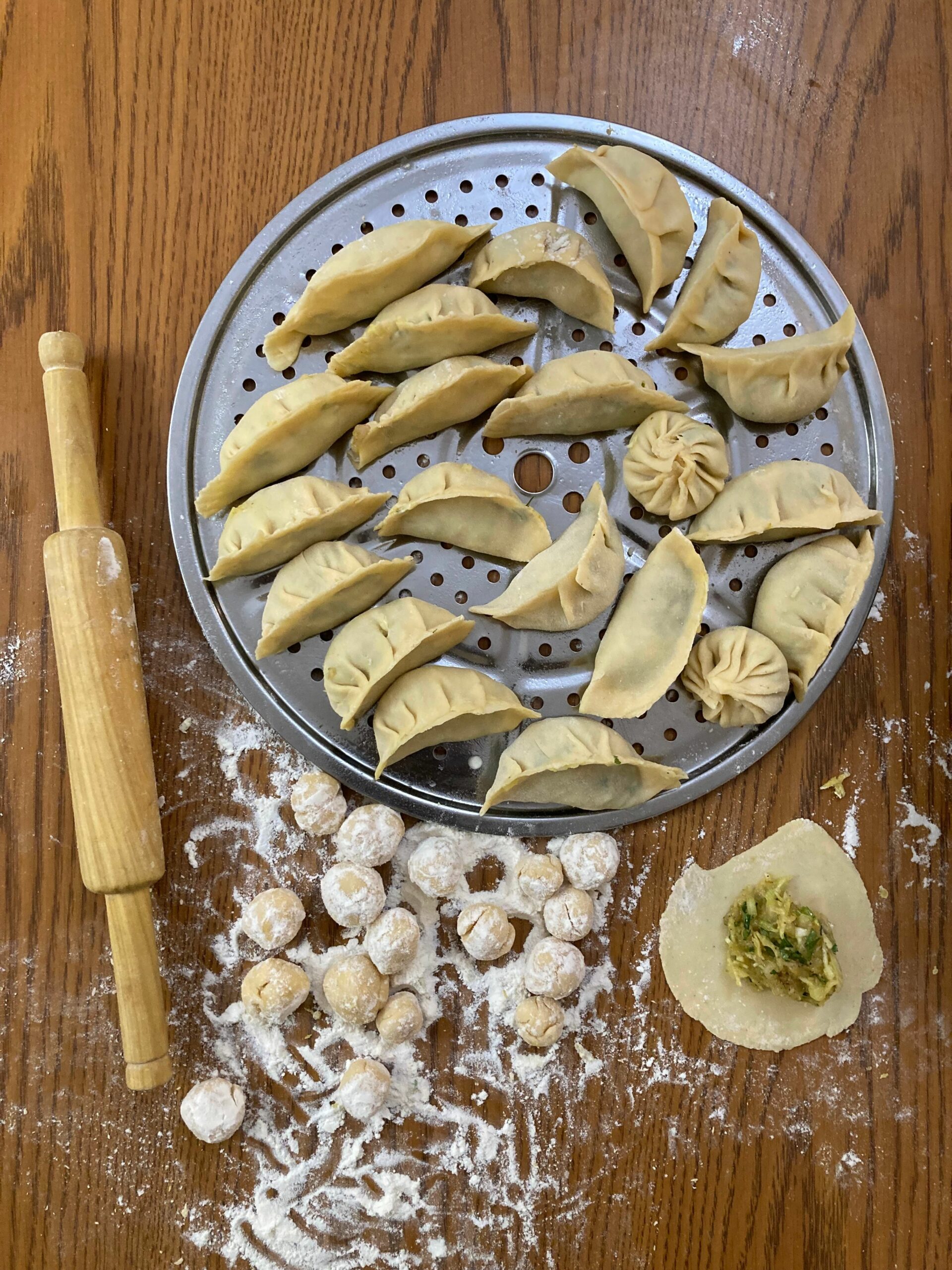
Achar: The Other Half of the Momo
Serving momos without their sauce would leave the dish feeling almost incomplete. In Nepal, they are usually accompanied by an achar whose recipe varies from one kitchen, family, and region to another. Tomato often forms the base, joined by ingredients such as sesame, cilantro, chili, garlic, or timur, a Himalayan spice with lightly citrusy notes and a distinctive tingling sensation.
The accompaniment brings acidity, heat, and depth that complement the softness of the dough and the juiciness of the filling. Its character can transform the entire dish: some versions are thick and creamy thanks to sesame, while others are fresher, intensely spicy, or almost liquid.
This diversity explains why two plates that look identical at first glance can offer remarkably different flavors. In Kathmandu, some establishments have even built part of their reputation around a house-made sauce, carefully guarded and refined over the years.
A Dish That Has Become Deeply Nepali
Today, momos are about much more than where they first came from. The Nepal Tourism Board lists them among the country’s most beloved snacks, and their presence throughout Nepal makes it easy to understand why. They are part of quick breaks, meals with friends, evenings out, and those moments when several plates arrive in the middle of the table and disappear almost immediately.
Their popularity also owes much to their simplicity. Momos are affordable, satisfying, easy to share, and adaptable enough for everyone to find a version they enjoy.
This ability to evolve has not diminished their identity; it has enriched it. What began as a preparation carried along trans-Himalayan trade routes has become something Nepal has made entirely its own, with its spices, ingredients, and a distinctive place in the country’s culinary culture.
Stepping Into the Kitchen
Tasting a dish is one way to discover its flavors. Preparing it offers a way to understand the gestures behind it.
During the ORION journey, a momo-making workshop offers precisely this opportunity to move from the table into the kitchen. The dough is rolled out, the filling prepared, and then comes the moment of folding, a movement that looks so natural when watching someone else but becomes far less obvious when the small circle of dough is between your own fingers.
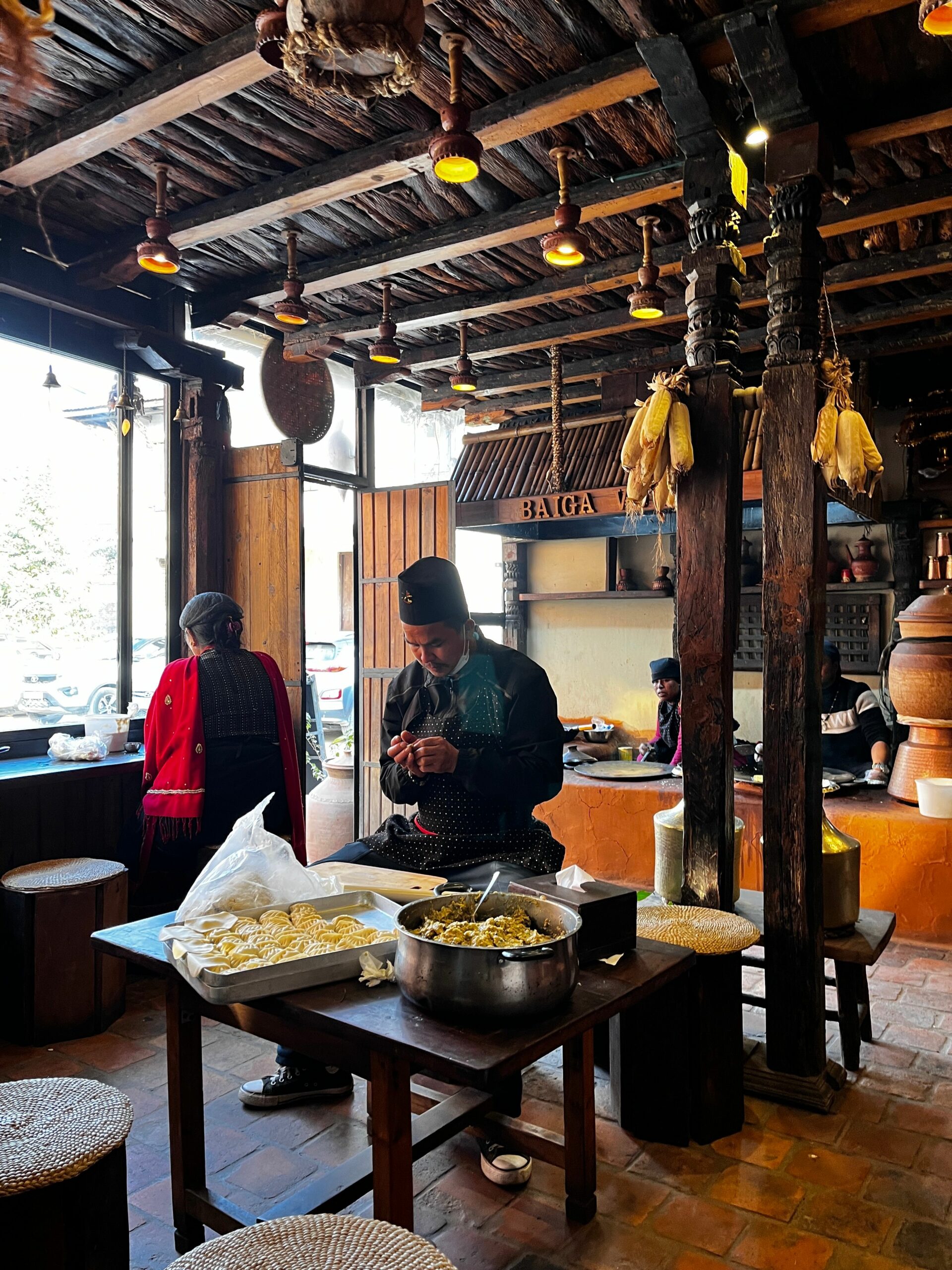
Little by little, the shapes begin to emerge. Some are neat and even, others distinctly more personal. But the real value lies elsewhere: taking part in the preparation of a dish encountered throughout the journey and learning its finer details from those who know it well.
Cooking has a particular ability to make a culture immediately accessible. No lengthy explanation is needed once the ingredients are on the table and hands begin to work. You watch, repeat a movement, exchange a few tips, and eventually everyone gathers to taste what has just been prepared.
Taking a Flavor Home
Some memories remain tied to a landscape, a face, or a sound. Others return through taste.
Momos easily belong to this second category. Perhaps because they make no attempt to be extraordinary, because they can be found around a street corner or shared table, or simply because their preparation tells a story that reaches far beyond what appears on the plate.
Once you have discovered their origins, watched the pleats take shape beneath someone’s fingers, and understood the importance of the little bowl of sauce served alongside them, you can no longer look at them in quite the same way.
And perhaps that is where their charm lies: in a simple, generous, shared cuisine capable of telling the story of Nepal in just a few bites.