In Bhaktapur, the eye lingers everywhere. On the weathered brick facades, the intricately carved wooden windows, the temples rising around a corner, and the small squares where daily life continues much as it has for generations. Just a few miles from the bustle of Kathmandu, the atmosphere feels remarkably different.
It would be easy to reduce Bhaktapur to its monuments. Yet what makes this former royal city so distinctive lies precisely in what exists between them: inner courtyards, workshops, discreet shrines, residents sitting beneath wooden shelters, and a heritage that remains part of everyday life.
A Former Capital Turned City of Art
To understand Bhaktapur, we need to look back to a time when the region was organized around powerful royal cities. Bhaktapur was long a major political center under the Malla dynasty, whose reign profoundly shaped the region’s architecture and arts. Following the division of the kingdom in the late 15th century, Kathmandu, Patan, and Bhaktapur each developed their own royal court, entering a period of rivalry that also encouraged extraordinary artistic achievement.
The rulers did not build solely to govern. Palaces, temples, ceremonial squares, fountains, and sculptures all contributed to the prestige of their kingdoms. Between the 16th and 18th centuries, architectural culture experienced one of its most prolific periods, leaving Bhaktapur with an exceptional legacy that survives today.
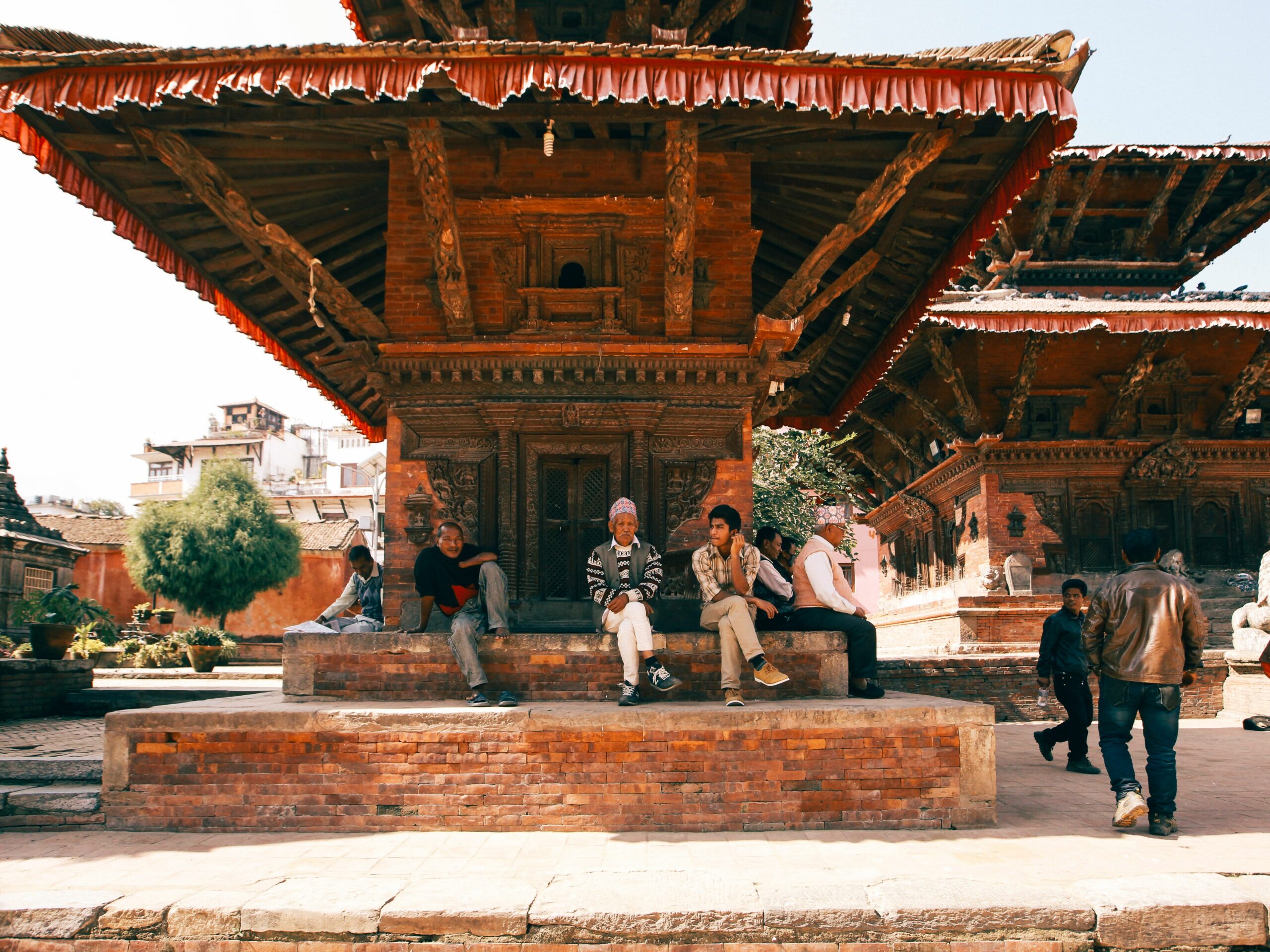
This history explains the remarkable concentration of architectural details encountered while walking through the city. A red-brick building might reveal an intricately carved window; a few steps farther, a shrine occupies the center of a small square before a narrow lane opens onto a monumental complex. Traditional Newar architecture brings together brick, wood, and stone with a level of craftsmanship that has contributed to its international recognition.
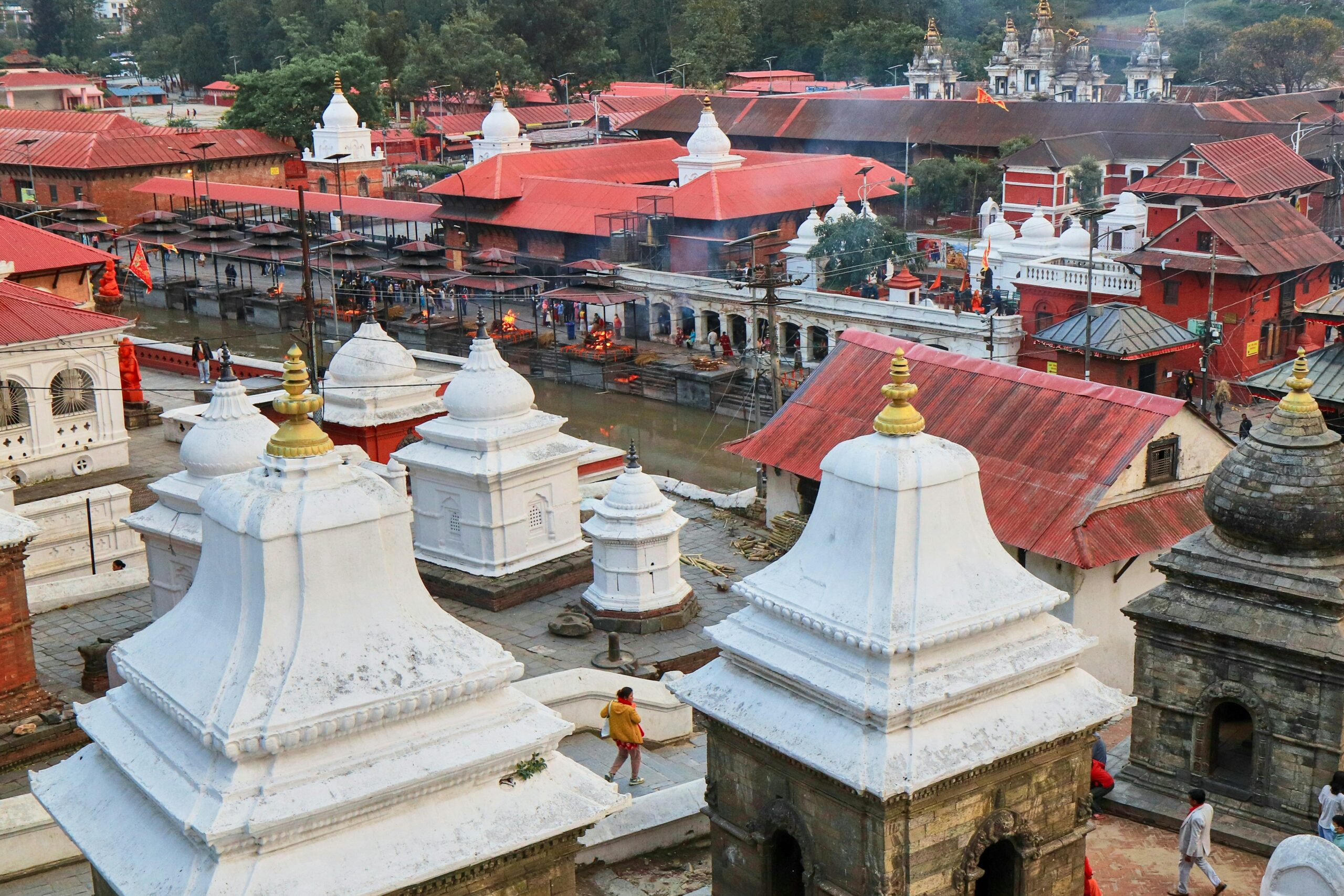
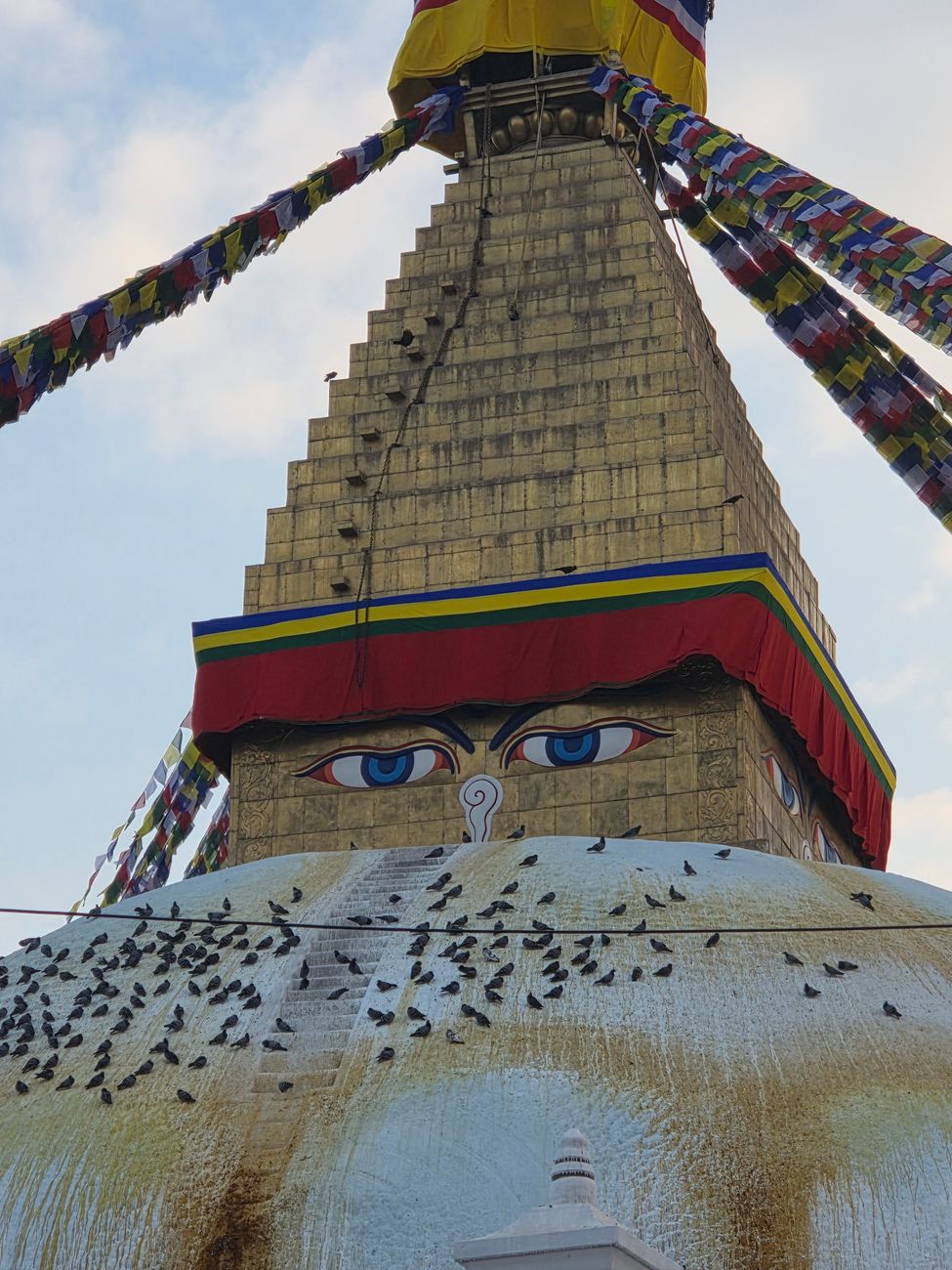
Bhaktapur is part of the Kathmandu Valley UNESCO World Heritage Site. Its monumental zone is one of seven protected groups of monuments, alongside the royal squares of Kathmandu and Patan, Boudhanath, Swayambhunath, and Pashupatinath.
A City Unfolding from Square to Square
Durbar Square is naturally one of the city’s main landmarks. Once the heart of royal power, it brings together buildings constructed between the 13th and 18th centuries. The Palace of Fifty-Five Windows and the Golden Gate still testify to the refinement achieved by artisans under the Malla rulers.
Yet stopping at Durbar Square would offer only an incomplete picture of Bhaktapur. The city unfolds as a succession of spaces connected by narrow streets, each with its own atmosphere.

At Taumadhi Square stands Nyatapola, whose name literally means “five stories.” Built in 1702 during the reign of Bhupatindra Malla, this temple dedicated to the goddess Siddhi Lakshmi rises above the city’s rooftops. Its immense staircase is guarded by several pairs of sculpted figures: men, elephants, lions, griffins, and deities appear in succession as you climb. In the symbolic design of the temple, each level of guardians possesses greater strength than the one below.
Farther on, Dattatreya Square reveals another side of Bhaktapur. Surrounding the temple from which it takes its name are traditional houses and masterpieces of woodcarving. The celebrated Peacock Window, carved with almost lace-like precision, is a reminder of how even the facades themselves could become works of art.
This layout completely changes the way the city is explored. Rather than a historic center surrounded by a modern city, traces of the past extend from one neighborhood to the next, accompanying every walk.
Beauty Revealed in the Details
In Bhaktapur, looking up becomes almost instinctive. The great temples first draw the eye, but much of the city’s richness is hidden in far smaller details.
The wooden windows are perhaps the most fascinating. Some feature such delicate latticework that they resemble dark lace set against brick facades. Elsewhere, carved wooden beams support the roofs, while doors, columns, and decorative elements reveal deities, animals, and botanical motifs.
These ornaments also carry symbolic meaning. In the valley’s traditional buildings, art, religion, and architecture have long been closely intertwined. The city reflects a Newar culture in which Hinduism and Buddhism coexist alongside tantric traditions and local practices, sometimes within the same urban setting. UNESCO identifies this coexistence as one of the region’s remarkable characteristics.
This is what makes walking through Bhaktapur so rewarding once you begin looking beyond its major monuments. A facade becomes a story, a carved detail may reveal a religious figure, and a small courtyard that might otherwise go unnoticed suddenly takes on a different depth.
Clay in the Hands of Artisans
Bhaktapur also has a much more down-to-earth side. In Pottery Square, grand buildings briefly give way to a craft whose essential material is clay.
Pottery is among the traditions historically associated with Newar communities. The different stages of production can still be observed: clay takes shape on the wheel, pieces are lined up to dry before firing, and finished vessels eventually make their way into shops or everyday use.
These small earthenware pots are also connected to one of Bhaktapur’s most emblematic specialties: juju dhau, literally “king of yogurts.” Traditionally made from buffalo milk, this thick, creamy yogurt is poured into clay containers that absorb some of the moisture as it sets, contributing to its distinctive texture. Served during Newar festivals and celebrations, it belongs to the traditions discovered as much in Bhaktapur’s streets as in its food.
This living presence reveals something essential: part of Bhaktapur’s identity is not preserved behind glass. It lives in gestures passed down, repeated, and adapted to the present.
That continuity can be found in workshops and locally crafted objects. Squares welcome conversations, shops open beneath old facades, and residents cross temple courtyards to reach another street. What impresses visitors as historic scenery remains, for those who live here, a familiar environment.
A City People Call Home, Not Just a Museum
The monuments are spectacular, but they alone cannot explain the impression Bhaktapur leaves behind. Beneath the pati, the open-sided shelters found throughout its neighborhoods, residents still gather to talk or simply watch the day go by. Elsewhere, religious practices continue around shrines, and traditional festivals regularly transform the streets. Bisket Jatra, celebrated around the Nepali New Year, is among the major events on the local calendar.

Bhaktapur also has another name: Khwopa, used in the Newar language. This detail reminds us that its identity rests on more than the buildings inherited from the Malla kings. It also belongs to the Newar community, whose members continue to live here, practice their traditions, and pass on their skills.
That is why the expression “a city frozen in time” deserves some nuance. Its stones and bricks may sometimes create that impression, but Bhaktapur is not standing still. It changes, restores itself, and evolves with the present while preserving a remarkable cultural continuity.
Taking the Time to Stay
In the ORION journey, Bhaktapur comes toward the end. This timing is no coincidence. After the monasteries, pilgrimage sites, spiritual practices, and days spent in the hills, returning to a city so densely layered offers a different way to reconnect with the many threads encountered since arriving in Nepal.
Hinduism and Buddhism reappear in the architecture, gestures observed elsewhere find echoes here, and the work of artisans gives tangible form to a culture gradually discovered throughout the journey. In the morning, a yoga practice precedes exploring the city, while the rest of the day leaves more freedom to wander down a side street or browse local craft shops.
Spending time here also changes the impression you take away. When the tour groups leave and the light begins to fade across the brick facades, attention returns to simpler things: a carved doorway that went unnoticed before, a few figures crossing a courtyard, the last shops still open, or temples gradually becoming silhouettes in the softening light.
Bhaktapur then reveals what truly sets it apart. Its richness is impressive because of its age, but its beauty also comes from the continuity between what has been passed down and what is still lived today.
You arrive to discover an ancient royal city. You leave with the feeling of having walked through a place where history still belongs to the present.